



In modern e-commerce, credit card processing has become the backbone, enabling near-instantaneous and seamless financial transactions. Even though customers receive a simple ‘approved’ or ‘declined’ message immediately, every credit card transaction process includes an orchestrated financial flow that involves encrypted data exchange, regulated institutions, and real-time risk assessment systems. Regarding the ecosystem, the global card network has processed around 828.1 billion buying transactions in 2025. Given the year-over-year increase, it is expected to have a 7.1% rise in the numbers in 2026.
What is Credit Card Payment Processing?
Credit card transaction processing refers to the end-to-end technological and financial infrastructure. It enables proper authorization, routing, clearing, settlement, etc. for card-based transactions. This is a multi-party system that includes:
- Cardholder
- Merchant
- Card networks
- Acquiring banks
- Issuing banks
Simply put, the flow includes CARDHOLDER – MERCHANT – PROCESSOR/PAYMENT GATEWAY – ACQUIRER – CARD NETWORK – ISSUER – RESPONSE. This cycle is further divided into ‘authorization’ and ‘clearing and settlement’.
How Does Credit Card Processing Work?
A transaction involves a few steps. To know how credit card payment processing works, here is a step-by-step explanation of the lifecycle:
- Initiation of the Transaction
The process starts when a cardholder initiates payment via NFC contactless tap, EVM chip insertion, magnetic stripe swipes, in-app payment systems, or mobile wallet. Here, sensitive credentials, such as PAN, CVV, and other details, may be captured.
- Data Capturing by the Merchant
The digital checkout platform or POS system used by the merchant will safely collect the transaction and related data. Further, they send it to the processor or payment gateway. For online platforms, the gateway is more like the ‘safest cryptographic relay layer’.
- Transaction Routing
At this stage of the credit card authorization process, the processors are used to determine the suitable payment routing according to the card network, i.e., Amex, MasterCard, or VISA. The processor sends the authorization request via the appropriate network for the next step.
- Authorization and Risk Scoring
Now, the issuing bank will perform underwriting in real-time and evaluate the associated risks using advanced systems. The evaluation is done based on certain parameters, like current credit limit, delinquency history, account status, velocity, and transaction amount, MCC (merchant category code), fraud scoring models, and more. A transaction will be declined if the card does not meet the standard codes.
- Response of Authorization
After assessing everything, the issuer decides the response- approved or declined to the processor and card network. Even if approval is given, it will indicate ‘conditional acceptance’, which is not the final settlement. This means the funds are not transferred.
Credit Card Processing Explained After Authorization
Once authorization is received, the transaction will enter the ‘clearing and settlement’ phase. It will further govern actual fund movement. During this, the typical sequence will include:
- Transaction authorization by merchant batches
- The acquirer will submit the necessary data to the concerned card network
- The respective network will perform clearing and reconciliation
- The issuer will initiate the transfer of the funds to the acquirer
- During this, the related fees, such as interchange and mark-up, will be deducted
- Lastly, the merchant will get the net settlement
Note: The settlement timeline varies based on the risk profile, geography, merchant, and acquirer’s agreement.
Understanding Authorization vs. Clearing vs. Settlement
Payment authorization and settlement, along with clearing, are mandatory for seamless financial operations. Thus, one should know these terms:
| Stage | Functions |
|---|---|
| Authorization | Credit validation and ‘approval’ in real time |
| Cleaning | Sharing of the necessary transaction data |
| Settlement | Interbank fund transfers |
| Reconciliation | Matching customers’ internal records with the bank |
What are the Credit Card Processing Fees?
Credit card transaction fees are known as the MDR, or Merchant Discount Rate. The core components of the fee structure include:
| Interchange Fee | Payable to the issuing bank |
| Network Evaluation Fee | Card networks charge this fee |
| Processor Mark-Up | Revenue for the processor |
| Ancillary Fees | Compliance, chargeback, batch, and monthly costs |
| Gateway Fee | Charged on digital transactions only |
Remember: The cost charged is influenced by the card-based risks, cross-border/domestic transactions, fraud exposure level, and others. Therefore, these fees are dynamic and risk-adjusted.
How Does Online Credit Card Processing Work?
Due to the lack of physical verification, e-commerce transactions are often exposed to online fraud. To mitigate the risk, one should know how online credit card processing works:
- Verification of the CVV
- AVS or Address Verification System
- Token-based framework
- 3DS or 3D authentication
- Fingerprinting
- Behavioral analytics engine
- Anomaly and velocity detection
The standard flow for online transactions often includes CUSTOMER – CHECKOUT – GATEWAY – PROCESSOR – ACQUIRER – NETWORK – ISSUER – RESPONSE. This flow ensures a smooth and fraud-prevention system.
Transaction Flow for Contactless Payment Processing and EMV Chips
Along with the standard card payment transaction flow, customers must get familiar with contactless payment processing, or Near Field Communication (NFC), and EMV chip-based transactions:
Contactless Payment Processing or NFC
- Contactless payments are initiated through NFC technology.
- It enables encrypted/sensitive data exchange between the device/card and terminal.
- Some characteristics include token-based credentials, reduced PAN data exposure, and faster cycle authorization.
- Remember, the backend process remains the same as the online and traditional transactions’ flow.
EMV Chips
- Stands for Europay, MasterCard, Visa; it is a globally recognized and accepted chip-based payment option.
- It generates a credit card processing work diagram or transaction-focused cryptogram.
- This is done to reduce the chances of fraud.
- A normal transaction flow includes chip-based communication, dynamic authentication of the data, issuer validation, and real-time decision.
What is the Payment Security Architecture?
The modern-day ecosystem counts on a multi-layered security framework, instead of single-point protection. The mechanism typically includes:
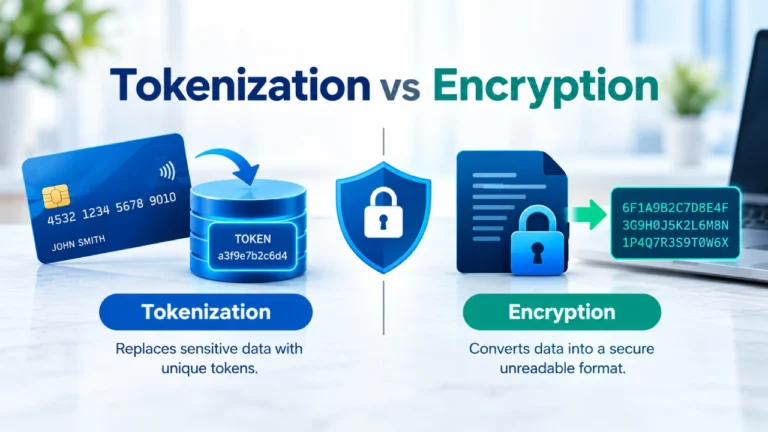
- Encryption: It protects sensitive data during transit.
- Tokens: This is used to replace sensitive PAN with proxy tokens.
- EMV: This cryptography prevents cloning of the card.
- CVV Authentication: It is used to check ‘card-not-present’ validity.
- Fraud Analytics: For anomaly detection, an AI-based system is used.
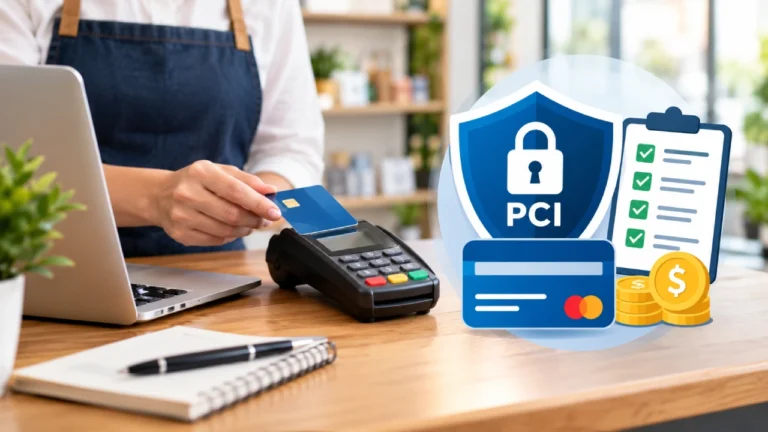
- PCI DSS: This is to meet the global security standards.
Why Do Credit Card Transactions Get Declined?
Approval or rejection is determined based on the policies and associated risks. Some common triggers for decline are:
- Insufficient credit
- Invalid or expired credentials
- Fraud detection
- Processor or network errors
- Geographic limitations
- Incorrect billing and related data
- Category blocks
Remember: Every decline comes with a standardized response code and analytical resolution.
Finally,
Credit card payment processing is a multi-layer financial orchestration system. It includes real-time authorization, cryptographic authentication, and inter-banking settlements. Simply put, the lifecycle includes initiation of the transaction, authorization, risk assessment, settlement, fund transfer, and post-transaction-related dispute handling. All these make every transaction well-structured and globally synchronized.
Frequently Asked Questions
It is a synchronized system that authorizes, processes, clears, and settles payments between the merchant and bank.
Generally, it can take up to 1 to 3 business days. However, the actual duration depends on the transaction type and acquirer.
The most common reasons include incorrect data, insufficient credit, restrictions from the issuer’s end, and fraud-related flags.
No, these are completely different terms that indicate different phases. Authorization means the transaction’s approval, while settlement stands for the fund transfers.
No, this is not a cheaper option, as it carries higher fees due to stringent authentication requirements and increased chances of fraud.

Join the conversation
Have something to add? Share your thoughts below.